A live course on Zoom
Architecture in the Time of Claude
AI can write code fast. It can also help you design systems that stay correct as they grow — if you know how to work with it. This is a live, instructor-led course held over Zoom: you'll work with Claude in real time to model domains, define service boundaries, and reason about distributed systems without shipping confident, plausible nonsense.
6 live sessions · Hosted on Zoom · Small student
AI makes it easy to build the wrong thing quickly
Claude can scaffold a service in seconds. It cannot decide, on its own, whether that service should exist. Teams that hand architecture decisions to an AI without a framework end up with fast, confident, badly-bounded systems — distributed monoliths, chatty services, and data models that don't survive contact with reality.
This course is about the other way to work: using Claude as a rigorous thinking partner for architecture, so the speed it gives you compounds instead of costing you later.
What you'll learn
Six live sessions over two days. Instructor led on Zoom, from domain modeling to production-ready service boundaries.
-
01
What do we mean by Architecture?
To developers from different ecosystems, the concept of effective architecture should be similar. But the implementations are rarely the same.
-
02
Using AI for Architecture
How to frame architectural questions so Claude challenges your assumptions instead of agreeing with them. Building a shared vocabulary for constraints, trade-offs, and non-functional requirements.
-
03
Modelling Your Domain
Understanding your domain is, in many ways, more important than the technical details that tools like Claude are great at. But learning how to model your domain using the intelligence of AI can simplify what can be a complex process.
-
04
Turning Your Domain into Services
Once you understand the domain, Claude can help you create define the boundaries of your system. These boundaries become the contracts between your services.
-
05
Designing Resilent APIs
Designing APIs and events with Claude, then stress-testing them together: what happens on partial failure, retries, and eventual consistency; before a single line of code ships.
-
06
Reviewing Architectures with AI
Using Claude as a second reviewer for existing systems; finding hidden coupling, unclear ownership, and single points of failure in an architecture you already have.
Who it's for
- Software engineers moving into architecture or staff-level roles
- Architects who want to use AI tools without losing rigor
- Tech leads designing service migrations
- Teams who've felt the pain of AI-assisted code outrunning AI-assisted design
What you'll need
- Comfort reading and writing code in any mainstream language
- Access to Claude (any current plan works)
- A real or hypothetical system to design during the exercises
- Zoom and a reliable internet connection for live sessions
- No prior services experience required
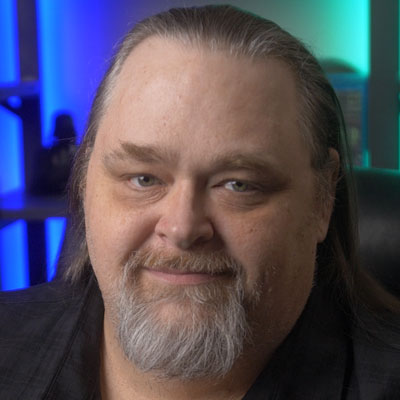
Your instructor
This course is taught by Shawn Wildermuth, a working software architect who has spent the last four decades designing and untangling systems. Much of his last couple of years has been finding effective and pragmatic ways to use AI in desinging systems. He's learned what AI-assisted architecture gets right and where it quietly goes wrong.
Frequently asked questions
Do I need to already use Claude?
No. We'll cover setup in the first session. What matters more is that you're comfortable making architectural decisions and want a better way to pressure-test them.
Is this a coding course?
No. There's some code in the exercises, but the focus is on decisions above the code level: boundaries, contracts, and trade-offs. You'll leave with a repeatable process, not just a project.
Will this teach me a specific architecture style?
No single style is "correct" for every system. We teach a method for reasoning about your constraints with Claude, then applying it; whether that lands you on services, a modular monolith, or something in between.
How does the live format work?
The course runs over two days, held live on Zoom with a small group so there's real time for questions and live architecture reviews. Each day runs 7 hours with breaks.
What if I miss a session?
Every session is recorded and shared with the student, but the exercises work best live; try to keep the schedule clear.
Save your seat
This is a live course held over Zoom, with space limited to keep the architecture reviews useful. Registration is handled through Eventbrite.
Eventbrite listing coming soon
Dates, pricing, and the registration link will appear here once the student is scheduled.
Get tickets on EventbriteQuestions before you register? Reach out and I'll get back to you.